No One Sitting in Pakistan Can Kill Indians With Impunity: Shashi Tharoor’s Strong Message
No One Sitting in Pakistan
In a bold and uncompromising statement that resonates across national and international lines, Congress MP Shashi Tharoor asserted that no one sitting in Pakistan should believe they can kill Indian citizens without facing consequences. His remarks come in the aftermath of the Pahalgam terror attack, where 26 innocent civilians lost their lives in a horrifying assault carried out by The Resistance Front. This act of brutality has triggered strong responses from India, including Operation Sindoor—targeted retaliatory strikes on terror infrastructure in Pakistan and Pakistan-occupied Kashmir. Tharoor emphasized that India’s approach has changed, and the new norm demands accountability and retribution..
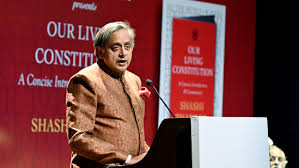
Addressing Indian-American leaders, media professionals, and members of think tanks in New York, Tharoor stated clearly that no one sitting in Pakistan would be permitted to continue the cycle of terror without a price to pay. Representing a diverse multi-party delegation, Tharoor is visiting several countries to communicate India’s firm resolve against terrorism. The team includes parliamentarians from the BJP, Congress, TDP, JMM, and Shiv Sena. Their unified voice stresses that India did not initiate hostilities but was left with no choice but to respond after the targeted killings in Pahalgam—a message that India intends to spread globally.
https://currentzone.in/wp-admin/post.php?post=278&action=elementorClick here for more update
India’s firm stance is not about expansionism, but self-defense. Tharoor reiterated that India has no interest in what Pakistan possesses. India is a status quo power, while Pakistan, according to him, remains a revisionist power, constantly seeking to claim territories not its own. He made it clear that no one sitting in Pakistan could assume that such ambitions would go unanswered, especially if they resort to terrorism. India has historically shown restraint, but the patience of a democratic nation is not infinite. With Operation Sindoor, India has shown it can act with precision and purpose while avoiding unnecessary escalation.
The Pahalgam attack, which deliberately targeted tourists based on religious identity, was not an isolated event. It is part of a long chain of terrorist acts stretching from the Mumbai 26/11 attacks to Pulwama and Uri. No one sitting in Pakistan can ignore this bloody history and continue to harbor illusions of impunity. India has repeatedly brought dossiers, evidence, and intelligence to the global stage. Yet Pakistan has denied its involvement and taken little to no visible action against those responsible. The culture of denial and protection of terrorist havens must end, and this message is now being delivered forcefully around the world.
The Congress MP stressed India’s focus on economic development and technological progress, a path vastly different from Pakistan’s. While India pulls millions out of poverty and integrates them into a modern global economy, no one sitting in Pakistan seems to prioritize peace or growth over conflict. This contrast underlines the diverging paths the two nations have chosen. For India, the priority is education, innovation, and inclusive development. For Pakistan, according to Tharoor, it appears to be territorial obsession and militant adventurism. The consequences of these choices are now visible to the world, and India is taking steps to ensure that such dangers are not ignored anymore.
Tharoor’s statements also reflect a broader policy shift. For years, India tried diplomacy, international pressure, and even patience. But now, the consensus appears to be that no one sitting in Pakistan should interpret India’s restraint as weakness. Operation Sindoor was not an act of aggression—it was a necessary action in self-defense. The operation demonstrated that India could act with remarkable precision, targeting only the terror infrastructure without harming civilian populations. This approach reinforces India’s message to the international community: terrorism will not be tolerated, and self-defense will be exercised responsibly but firmly.
Importantly, Tharoor dismissed any narrative suggesting that Operation Sindoor was the cause of recent tensions. The truth, he said, is that no one sitting in Pakistan should ignore—the conflict began with the Pahalgam massacre, not India’s response. India was reacting to terror, not provoking it. By setting the record straight, the delegation hopes to counter Pakistani propaganda and bring clarity to global stakeholders. The mission is not just about retaliation, but about redefining the rules of engagement. From now on, the cost of terrorism against Indian citizens will be too high for any adversary to ignore or dismiss lightly.
Social Media
Milind Deora, Tejasvi Surya, and others in the delegation supported this message during their visit to the National September 11 Memorial in New York, symbolically linking India’s battle against terrorism with the global fight against extremist violence. Their presence was a powerful reminder that terrorism affects all nations, and solidarity is essential. The message remains consistent—no one sitting in Pakistan can continue sponsoring or tolerating terrorism and expect normalcy in return. Peace is desired by India, but not at the cost of innocent lives. Any repeat of incidents like Pahalgam will be met with calibrated, strategic, and proportionate force.
Ultimately, India’s vision is not war, but peace through strength. Tharoor made it clear: “We would much rather be left alone to grow our economy and put our people into the world of the 21st century.” But no one sitting in Pakistan should mistake this for passivity. India is a modern, democratic power with a deep commitment to justice and national security. The current global outreach is part of a broader diplomatic strategy to isolate state-sponsored terror and unite the world against those who protect it. As this campaign continues, the international community must decide where it stands—on the side of peace or silent complicity.